
How to Choose Your First Pair of Cycling Bib Shorts?

In this article
How to Choose Your First Pair of Cycling Bib Shorts: Chamois, Fabric & Fit Explained

Spring is here, and city streets and countryside roads are filling up with cyclists again.
More people are starting to record their rides, and weekend plans are shifting from coffee meetups to casual 30-kilometer rides with friends.
But after your first slightly longer ride, you may quickly discover something important:
Your bike isn't the only thing that determines how comfortable your ride feels. Your bib shorts matter too.
Regular athletic shorts might work for a short spin, but as your time in the saddle increases, sweat, friction, pressure, and fabric movement can become increasingly noticeable.
For riders just getting into cycling, choosing the right first pair of bib shorts is often more important than chasing the most technical or race-focused equipment.
There are three key things worth paying attention to:
Chamois. Fabric. Fit.
PART 1 | Chamois: The Foundation of Riding Comfort
For many new cyclists, the chamois is probably the most unfamiliar part of a pair of cycling shorts.
Why does cycling apparel need padding in the first place?
The answer is simple.
During a ride, a significant amount of body weight is supported around the contact points between your sit bones and the saddle. At the same time, thousands of pedal strokes create continuous small movements and friction.
A cotton lining in regular sportswear can absorb sweat and quickly become damp. Once wet, it may retain moisture and increase friction against the skin.
A properly designed cycling chamois works differently.
Think of it as a cushioning and support system specifically developed for the riding position. Different zones help manage pressure around key contact areas while reducing unnecessary friction during pedaling.
Thicker Doesn't Always Mean Better
There are many different types of cycling chamois, and the best choice depends largely on how and where you ride.
Short Rides / Beginner Cycling
A softer and more forgiving chamois can be a good starting point. For new cyclists, the priority is usually comfort rather than ultra-thin, race-oriented padding.
Medium to Long Rides
A medium-density chamois can provide a better balance between cushioning, stability, and durability as your time in the saddle increases.
Racing / High-Intensity Riding
More performance-focused riders often prioritize stable support, precise anatomical positioning, and efficient pressure distribution.
As a general reference, foam densities may fall into ranges such as:
- Low-density foam: approximately 70–80 kg/m³
- Medium-density foam: approximately 90–100 kg/m³
- High-density foam: over 120 kg/m³
But density alone doesn't determine whether a chamois is good.
Thickness, shape, pressure zones, breathability, foam quality, and ergonomic construction all contribute to the final riding experience.
For beginners, a balanced chamois around 10–15 mm thick can often provide a more forgiving introduction to longer rides than an extremely thin racing pad.
What Else Should You Look for in a Chamois?
Foam density is only part of the story.
Several other details can make a noticeable difference once you start spending more time on the bike.
Breathability and Quick-Drying Performance
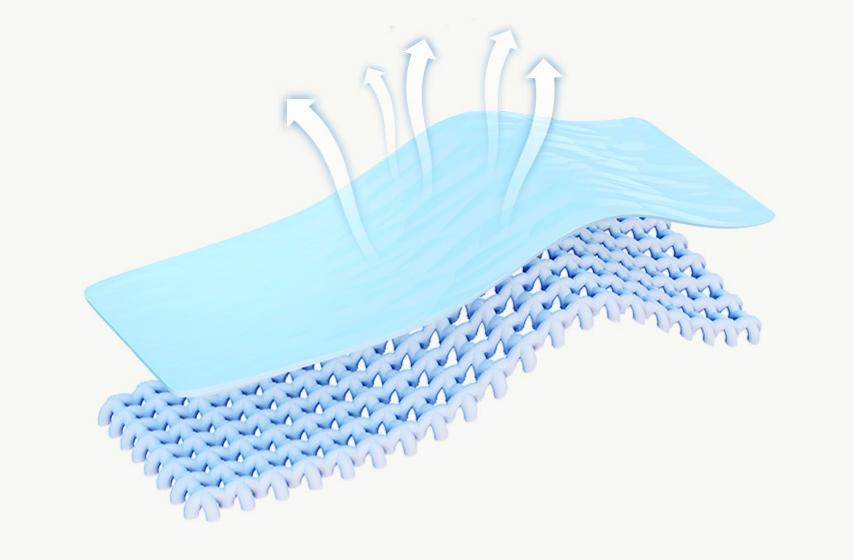
The longer you ride, the more important moisture management becomes.
If a chamois remains damp for extended periods, both comfort and friction management can suffer.
A breathable, quick-drying construction helps move moisture away from the body and maintain a more comfortable environment during longer sessions.
Ergonomic Construction
A professional cycling chamois isn't simply a piece of foam sewn into a pair of shorts.
Its shape should correspond with the riding position and provide targeted support around key contact points.
That's also why cycling bib shorts may feel slightly unusual when you're standing upright.
Once you get into your normal riding position, however, the structure should feel much more natural.
Cleaning and Care
Because the chamois sits directly against the skin, cycling shorts should be washed after every ride.
Following the recommended washing instructions and allowing the garment to dry completely can help maintain both the chamois and fabric performance while extending the life of your bib shorts.
PART 2 | Fabric: Stretch Is Only the Beginning
If the chamois determines how comfortable you feel on the saddle, the fabric determines how the entire pair of bib shorts feels while you're riding.
Good cycling fabric should deliver at least three important qualities:
Moisture management, reliable elasticity, and durability.
1. Moisture Management: Stay Dry as the Ride Gets Harder
Cycling generates continuous heat and perspiration.
During spring and summer rides in particular, moisture can quickly build up around the legs, waist, and saddle contact areas.
Performance cycling fabrics are therefore designed to move moisture away from the skin and encourage faster evaporation.
Instead of simply asking whether a fabric feels cool when you first touch it, a more useful question is:
How quickly does it return to a dry and comfortable state after you start sweating?
That makes a much greater difference during longer rides.
2. Elasticity: Close-Fitting Doesn't Mean Restrictive
Cycling bib shorts are designed to fit close to the body.
A close fit helps reduce excess fabric movement and can also improve aerodynamics.
But:
Close-fitting doesn't mean tighter is always better.
A good pair of bib shorts should stretch naturally with your muscles while maintaining enough recovery to stay securely in place.
Fabrics containing elastane or similar stretch fibers generally offer better multidirectional flexibility.
For example, the LAMEDA Men's/Women's Basic Bib Shorts use:
80% Nylon + 20% Elastane
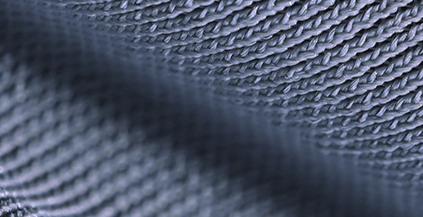
The high-density stretch fabric provides a lightly compressive feel while maintaining the flexibility needed for natural pedaling movement.
A simple way to evaluate stretch fabric is to pull it gently in several directions and observe how quickly it returns to its original shape.
The important question isn't simply:
“How far can it stretch?”
It's:
“How well does it recover afterward?”
3. Abrasion Resistance: Built for Repeated Movement
Cycling involves constant repetitive movement.
Every pedal stroke stretches and moves the fabric, while contact with the saddle creates repeated friction over the course of a ride.
It's unrealistic to expect any fabric to remain completely immune to wear forever.
However, higher-quality cycling fabrics can significantly reduce premature pilling, surface abrasion, and deformation.
When evaluating a pair of bib shorts, look at details such as:
- Whether the fabric surface is smooth
- Whether loose fibers are visible
- How dense and consistent the knit structure appears
- Whether the fabric recovers properly after stretching
And whenever available, professional material test data will always provide more useful information than touch alone.
PART 3 | Fit: 3D Cutting Doesn't Simply Mean “Tight”
One of the most common misconceptions among new cyclists is:
The tighter the shorts, the more professional they must be.
That's not how good cycling apparel works.
The real purpose of a cycling-specific pattern is to allow the garment to move naturally with the body while you're actually riding.
Your body isn't upright on the bike.
Your hips are flexed.
Your legs are continuously extending and bending.
Your torso is leaning forward.
All of these movements change how fabric stretches across the body.
That means cycling bib shorts should be designed around the riding position, not simply around how they look when you're standing in front of a mirror.
Three Things a Good Cycling Fit Should Deliver
Fit and Comfort
Bib shorts should sit closely against the body without creating excessive pressure.
If you experience strong compression or discomfort around the waist, legs, or groin, the shorts may not be right for you—even if they look “racy.”
More important than compression level is something much simpler:
Choosing the correct size.
Adaptation to the Riding Position
Once you're on the bike, pay attention to several areas.
Does the front fabric bunch up?
Does the rear panel feel overstretched?
Do the shorts slide down?
Does the chamois stay correctly positioned?
A well-designed pair of bib shorts should actually feel more natural once you're in the riding position.
Freedom of Movement
When trying on bib shorts, simulate a riding position, raise your legs, or mimic a pedaling movement.
If the leg openings constantly ride upward, the chamois shifts out of position, or the fabric twists noticeably, the pattern may not be working well with your body.
Your First Bib Shorts Don't Need to Be the Most Technical

If you're buying cycling bib shorts for the first time, there's no need to start with race-level equipment.
A well-balanced pair is often a much better choice.
The design philosophy behind LAMEDA's entry-level Men's Basic Bib Shorts and Women's Basic Bib Shorts focuses on the problems new cyclists are most likely to experience.
For example, the Men's Basic Bib Shorts use a chamois with approximately 14 mm of cushioning, providing additional support and localized pressure relief.
The fabric combines:
80% Nylon + 20% Elastane
to balance stretch, light compression, moisture management, and freedom of movement.
The pattern is also developed around the riding position, helping the garment follow the natural contours of the body while reducing unnecessary shifting during pedaling.
The goal isn't simply to make cycling shorts:
thicker, tighter, or more complicated.
It's about finding the right balance between:
chamois support, fabric performance, and fit.
Ride More Comfortably, Ride Further
When we first get into cycling, it's easy to focus on frames, drivetrains, wheels, and speed.
But once your rides grow from 10 kilometers to 30, and eventually from 30 to 50 kilometers or more, you begin to notice something else:
The smallest details closest to your body can have the biggest impact on your ride.
A properly supportive chamois.
A fabric that manages moisture instead of holding onto sweat.
A pattern that is actually designed around the cycling position.
These details may not look as exciting as a new bike component, but they can determine whether you finish a ride feeling comfortable—or spend the final kilometers constantly adjusting your kit.
Your first pair of cycling bib shorts doesn't need to be the most “professional” option available.
What matters more is that they are:
Comfortable. Well-fitting. Stable.
And that they let you simply get on the bike and enjoy the ride.
Because the best cycling gear isn't something you constantly notice.
It's something you eventually forget you're wearing—
so your attention can return to the road, the scenery, and the next kilometer ahead.
